

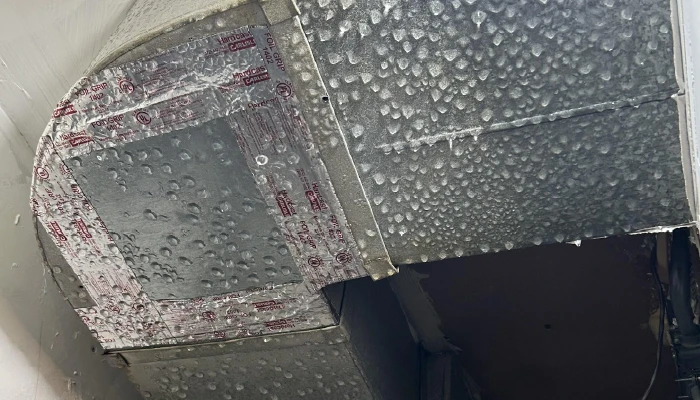
Air ducts can sweat when their outer surface is cold enough for moisture in the surrounding air to condense. If you notice wet ductwork or dripping AC vents in your Houston home, the next step is to identify where the water starts. Cleaning alone does not establish or correct the cause.
Water around HVAC equipment can come from several places. It may be condensation on a duct, drainage from the cooling equipment, or a separate leak nearby. The right repair depends on that distinction.
Supreme Air Houston provides air duct and HVAC cleaning. This guide explains what to document, what a qualified HVAC assessment should check and where cleaning may fit after the moisture problem is understood.
What “sweating” means
The moisture comes from the air around the cold surface. Think of water forming on the outside of a cold glass. Dew point is the temperature at which that air reaches saturation and condensation can begin. A duct surface below the local dew point can collect water.
The relevant conditions are those beside the duct. A humidity reading in a bedroom does not describe the air in an unconditioned attic. Temperature and humidity readings need to be associated with the location being evaluated.
That is why an inspection should go beyond the thermostat setting. Ask the technician where measurements were taken and how those findings support the diagnosis. The explanation should connect the surrounding moisture, surface condition and proposed correction.
First, locate the water
Tell the contractor where you first saw moisture and what was operating at the time. Was there water on the outside of a duct, on a ceiling grille, around the air handler or on the ceiling below it?
A stain may be below the source rather than directly beside it. Treat it as a location clue. Ask the inspector to trace the moisture before assuming which component needs work.
| Where you notice water | Questions for the assessment |
| Outside an attic duct | Is this condensation, and what are the local surface and humidity conditions? |
| On or around a ceiling vent | Is moisture forming on the grille, near the connecting boot, or arriving from elsewhere? |
| Around the air handler or drain pan | Is the cooling system draining correctly, and where does the water originate? |
| On the ceiling near ductwork | Does the water trace to HVAC equipment, roofing, plumbing or another source? |
These observations help organize an inspection. They do not establish a diagnosis. Avoid cutting open duct insulation or climbing through an unsafe attic to find the source yourself.
Duct insulation and its outer covering need inspection
Duct insulation slows heat transfer and helps keep the outer surface warmer than the cold air inside. The outer vapor-retarding covering helps limit moisture reaching cold surfaces within the insulation. NAIMA’s duct guidance explains why both insulation performance and vapor control matter for condensation.
Ask the inspector to check for missing, compressed or damaged insulation and openings in the outer covering. Seams, connections and awkward bends deserve attention. A large intact-looking section does not show whether every joint is protected.
A repair should specify what will be restored: the duct connection, the insulation, the outer covering or some combination. Simply saying “wrap the duct” does not tell you whether wet material or damaged sections were assessed.
Do not puncture the outer jacket to drain trapped water or cover a wet section with another layer as a temporary experiment. Ask the HVAC professional to assess the assembly and explain an appropriate repair.
Air leaks and surrounding humidity can contribute
Air movement can carry moisture into places where it condenses. PNNL explains that leakage and pressure differences can move humid air through a building. The inspection may therefore need to consider duct leakage and nearby air paths, not just the visible wet spot.
Ask how the contractor will determine whether a leak is present and how a repair will be checked. A stain does not prove that an entire duct system needs replacement. A specific damaged connection should come with a specific explanation.
For the occupied rooms, EPA recommends keeping indoor humidity below 60%, ideally between 30% and 50%. Those are indoor guidance levels, not a requirement to make a vented attic match the house. Record where any humidity measurement was taken.
If rooms also feel clammy, mention that separately. The technician needs to understand both the duct moisture and the comfort complaint before deciding whether they share a cause.
Check cooling-system drainage too
The cooling system has a condensate drain to carry away collected water. A plugged drain can cause water damage and affect indoor humidity. ENERGY STAR includes drain inspection, coil care and blower checks in its HVAC maintenance guidance.
Ask whether the water is forming on the outside of the duct or escaping from the equipment’s drainage path. A drain correction and a duct-insulation repair are different jobs. One does not automatically solve the other.
Tell the technician about recent maintenance, equipment changes or any time cooling stopped. If there is active water near electrical components, stay clear and arrange prompt professional help. Do not open energized equipment or bypass a safety switch.
When does duct cleaning fit?
Cleaning may be appropriate when inspection identifies buildup that needs removal from suitable duct or HVAC surfaces. First, establish how the moisture will be corrected. A proposal should explain the cleaning scope and the moisture work separately.
EPA says wet or moldy duct insulation cannot be effectively cleaned and should be replaced. It also emphasizes correcting the underlying condition so contamination does not return. Ask the inspector to identify the affected material, rather than recommend the same treatment for every duct type.
Bare metal, an internally lined duct and an insulated flexible duct are different assemblies. Ask which surface is affected and what can be reached. If replacement is proposed, request the extent and reason in writing.
Our Houston site describes inspection, cleaning and before-and-after documentation. Ask our team how that cleaning scope relates to the findings from your HVAC assessment. If a repair falls outside the cleaning service, clarify who will perform it and when.
Avoid fixes that cover up the evidence
Adding attic insulation without reviewing the ducts
Burying ducts under attic insulation is a design decision. PNNL’s guidance for humid climates includes measures to manage condensation risk. Do not treat loose-fill insulation piled over a sweating duct as a general repair. Have the proposed assembly reviewed first.
Spraying or coating a damp area
Ask what problem the treatment is intended to solve. It should not replace an explanation of where the water comes from, whether material is damaged and how the moisture condition will be corrected.
Changing settings until the wet spot disappears
A change in settings can change what you observe, but it does not prove the underlying issue is resolved. Record the original and new settings for the technician. Ask for a diagnosis before accepting a permanent comfort tradeoff as the solution.
Prepare a useful record before the appointment
From a safe, accessible location, collect the observations below. Do not enter a hazardous area just to complete the list.
- Photograph the affected vent or stain and identify the room. Include a wider view for context.
- Note whether the AC was running and whether the moisture followed rain or appeared during dry weather.
- Record when the problem began and whether it is constant or intermittent.
- List recent HVAC, roof, insulation or plumbing work, if any.
- Keep any indoor humidity reading with its room location and time.
Send the information ahead if the contractor accepts it. It can help them plan the assessment, but photos should not replace the visit when the source remains uncertain.
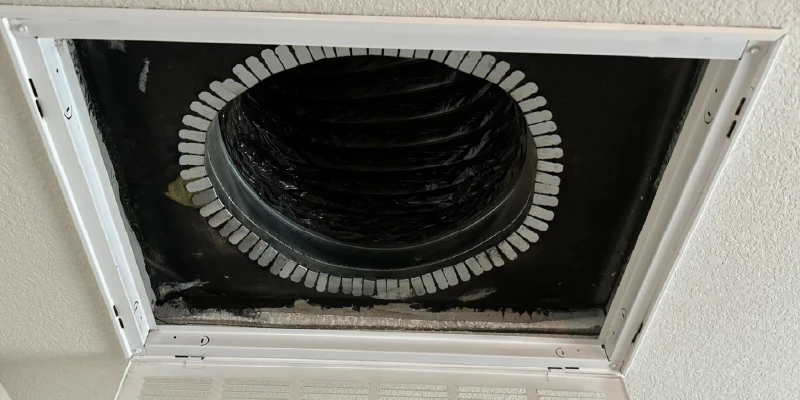
What should the repair proposal explain?
Ask for the source of the water, the affected materials and the proposed correction. The proposal should also describe how wet or damaged material will be handled and whether another trade is needed.
Separate the work into clear items when necessary: diagnosis, repair, material replacement and cleaning. That makes it easier to see what each cost addresses and prevents the cleaning from being mistaken for a complete moisture repair.
Before work starts, ask how success will be checked. What conditions will the technician recheck? What should you watch for afterward? If the problem is intermittent, ask what to document if it returns.
Keep the photographs, readings and completion notes. An invoice marked “completed” is less useful for a recurring problem than a record showing the finding, the correction and the follow-up plan.
Discuss the findings with Supreme Air Houston
If an assessment identifies duct or HVAC buildup that needs cleaning, contact Supreme Air Houston to discuss the affected areas. Tell us about the moisture issue and any repair recommendation so the cleaning can be planned around the condition of the system.
Call (281) 916-8689 or contact Supreme Air Houston. Ask the team to explain the cleaning scope, current pricing and any work that needs a separate HVAC contractor.